Cell model from a pulse test
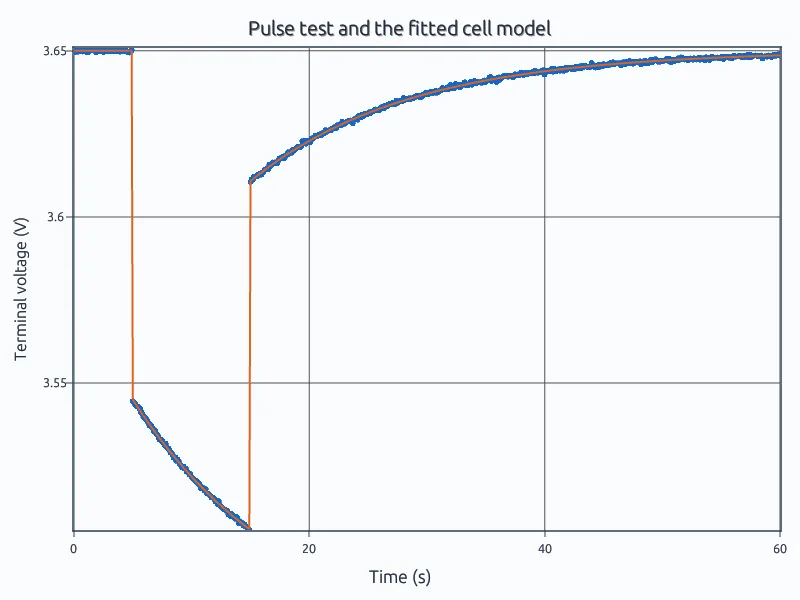
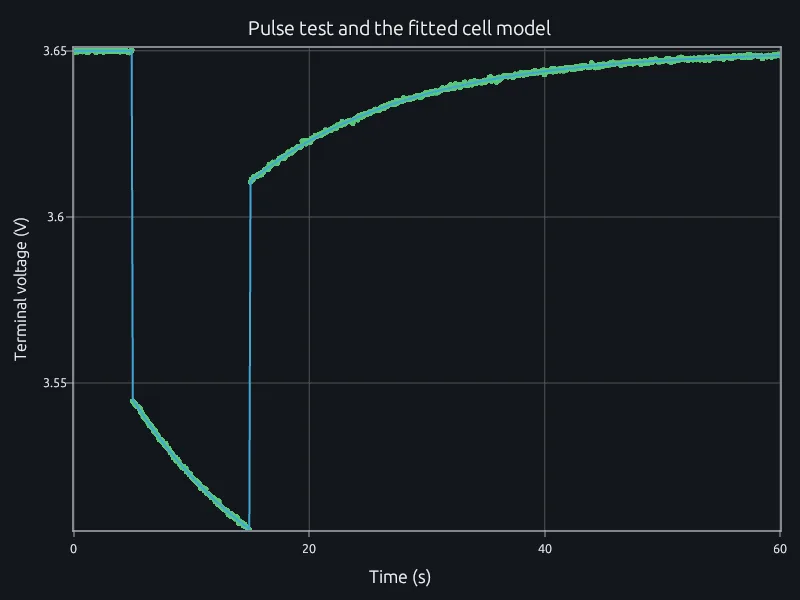
A one-RC equivalent circuit fitted to a 50 A pulse.
Fit cell models from pulse tests, run pack designs through drive cycles and check module temperatures, in the MATLAB language, on hardware your team already has.
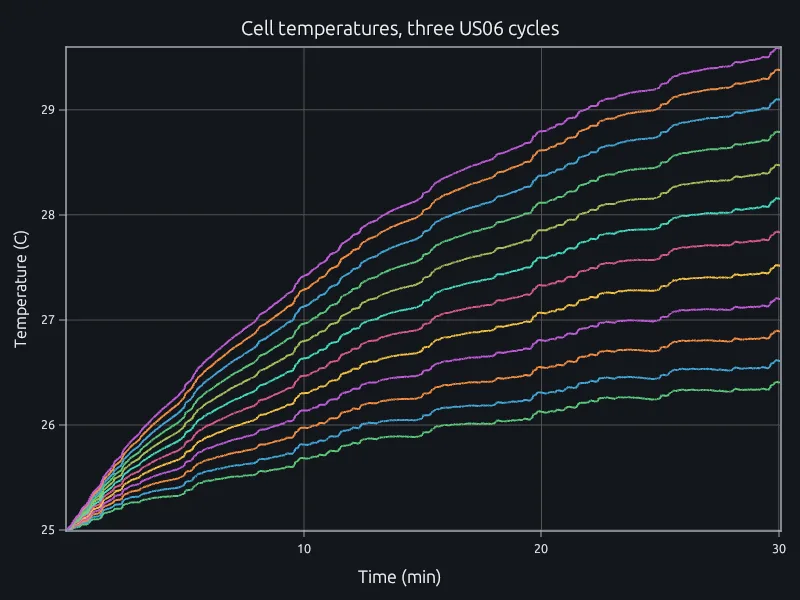
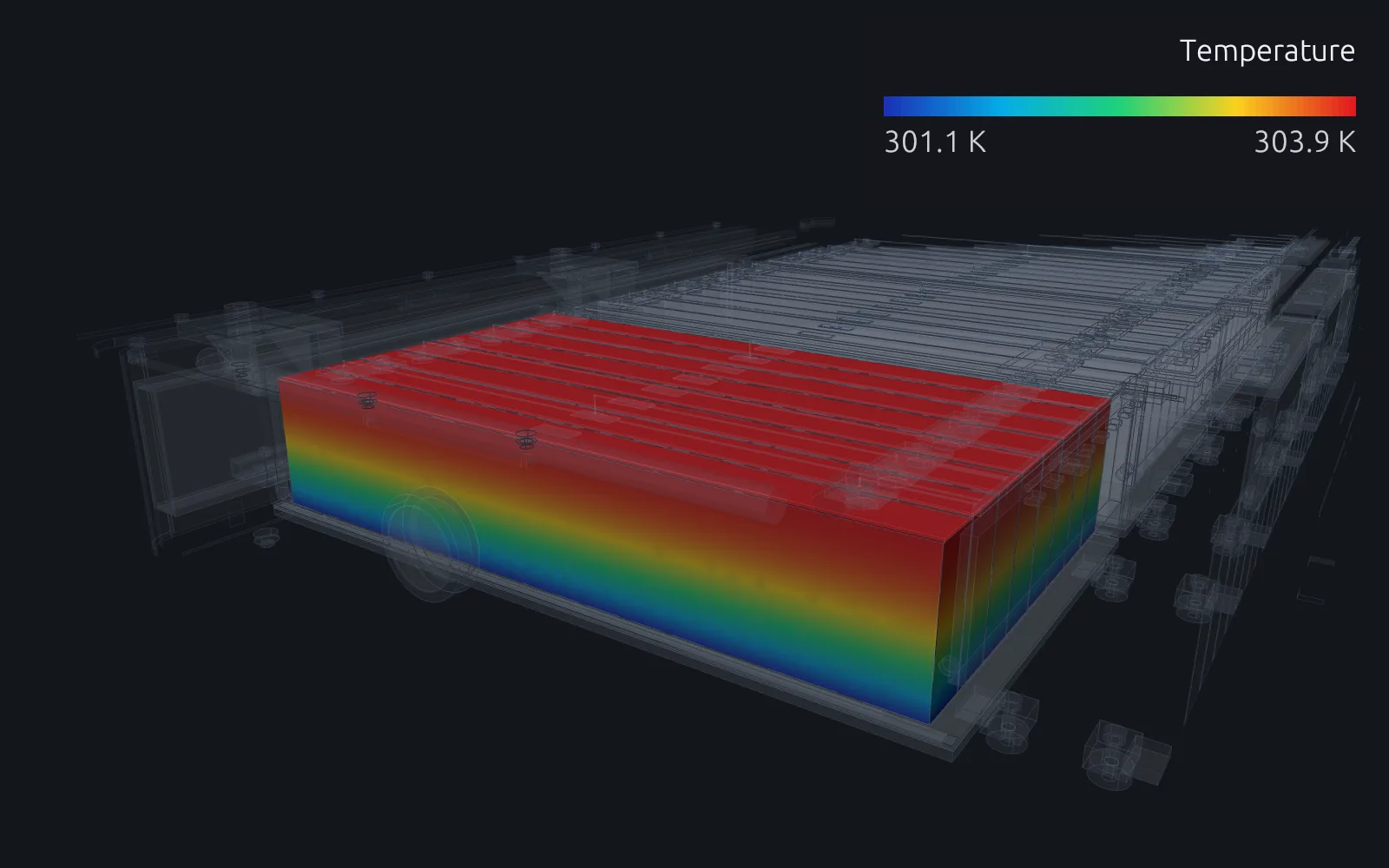
Check a module's cell temperatures as a study in the same project as your cell and pack models. The study selects the cells and their cooled faces by name from the pack's STEP file and sets each cell's heat and the cold plate's cooling, with a unit on every number. Its header works out a hand estimate of the peak to check the solved result against.
Change the cell heat or the coolant and rerun. Sweep heat load and cooling over dozens of studies in parallel, on a workstation or a cluster you run, and compare them in one script.
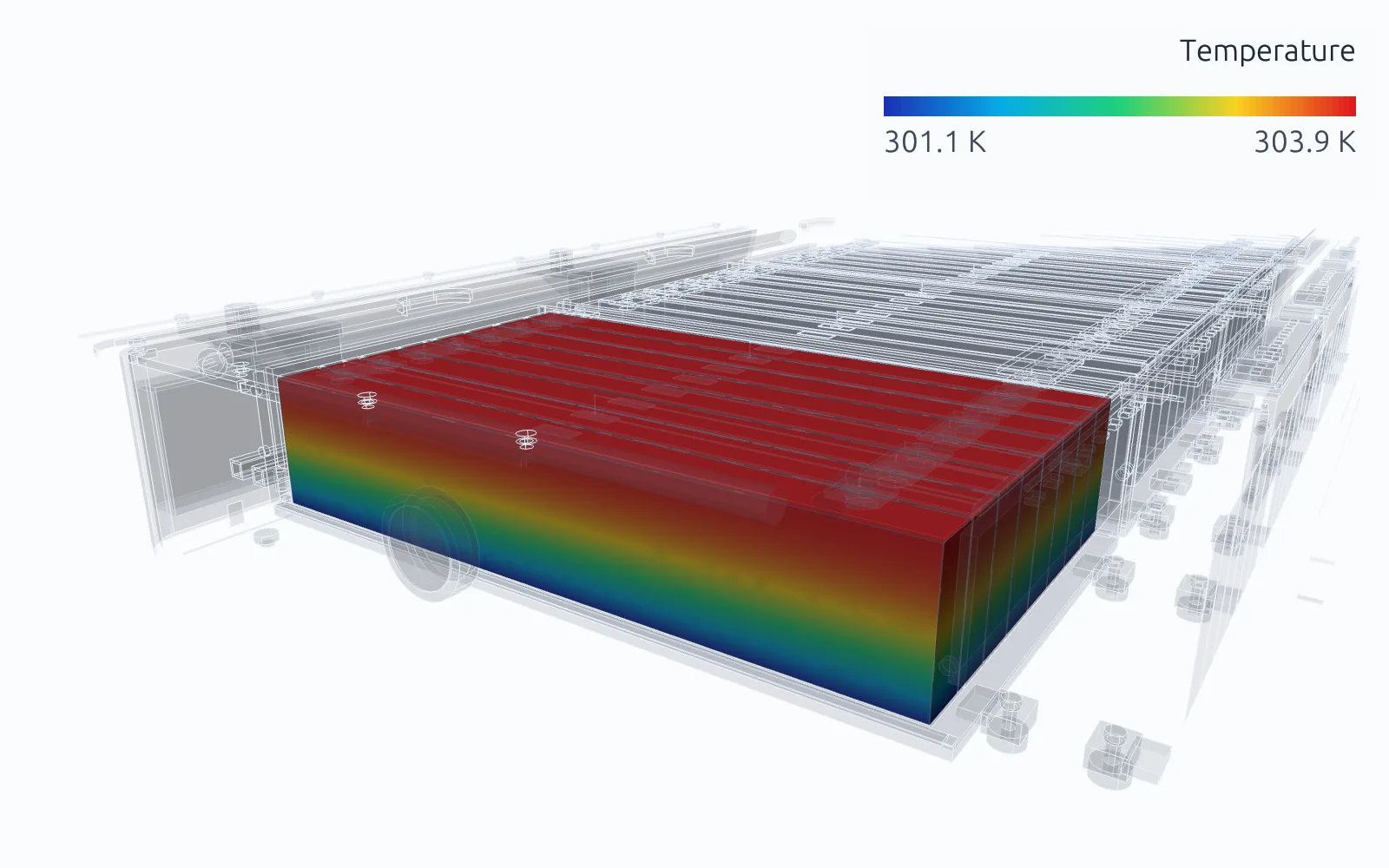
Your cell identification, state-of-charge and drive-cycle scripts run in RunMat as they are, so nobody rewrites them in Python and validates them again.
The fit beside this recovers the cell it was built from.
[t, V] = pulse_test();ocv = 3.65; % open-circuit voltage here (V)on = @(t) t >= 5 & t < 15;fall = @(t, tau) (t >= 15).*(1 - exp(-10/tau)).*exp(-(t - 15)/tau);rise = @(t, tau) on(t).*(1 - exp(-(t - 5)/tau)) + fall(t, tau);% Parameters: R0 and R1 in milliohms, the RC time constant in seconds.model = @(p, t) ocv - p(1)/1000*50*on(t) - p(2)/1000*50*rise(t, p(3));p = lsqcurvefit(model, [1 1 5], t, V);fprintf('R0 %.2f mOhm, R1 %.2f mOhm\n', p(1), p(2));fprintf('time constant %.1f s\n', p(3));
$ runmat cell-model.mR0 2.10 mOhm, R1 1.50 mOhmtime constant 13.5 s
Point the same script at every logged trace from every pack variant, and the whole team opens the results in one project, with each run kept beside the data that produced it.
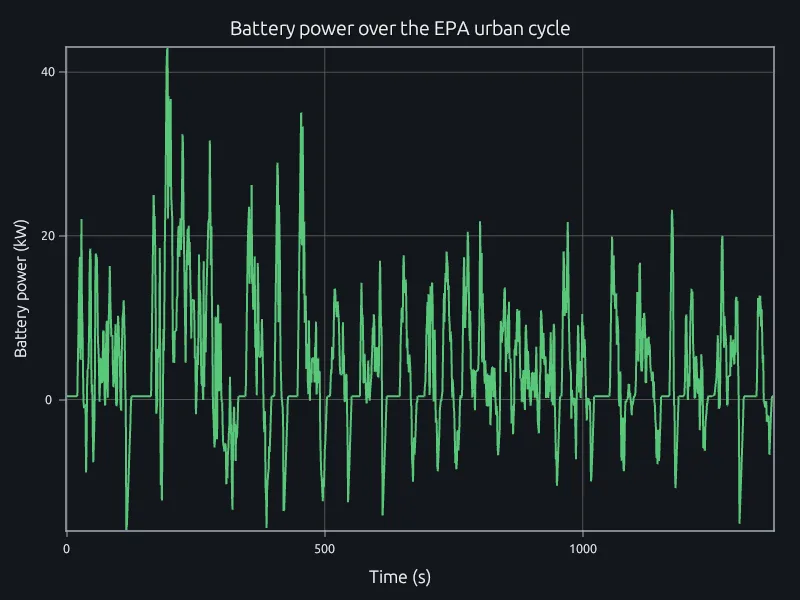
The example beside this takes a pack through the EPA's urban cycle; swap in your own logs and rerun.
Change for to parfor and RunMat runs each pack variant through each cycle across the cores of a workstation or a cluster you run, so the pack decision rests on every cycle, not the one there was time to run.
Results from every run come back into one table, kept with the variant and cycle that produced them, so the comparison behind a pack decision can be rerun when the cells change.
% Every pack variant through every EPA cycle
cycles = {'udds', 'hwfet', 'us06'};
whkm = zeros(numel(packs), numel(cycles));
parfor k = 1:numel(packs)
    whkm(k, :) = cycle_energy(packs(k), cycles);
end
[~, best] = min(mean(whkm, 2));RunMat gives the same answer from the same data every time, so your model fits can sit in CI as regression tests. A change that moves a parameter fails the build before it reaches the BMS team.
RunMat is a single executable of about 200 MB that installs on a CI runner in one line, with no license server.
name: cell-modelon: [push, pull_request]jobs:regression:runs-on: ubuntu-lateststeps:- uses: actions/checkout@v4- run: curl -fsSL https://runmat.com/install.sh | sh- run: runmat cell-model-check.m
$ runmat cell-model-check.m3 of 3 parameters within 1% of the referencecell model regression: pass
The battery engineer and the thermal lead work in the same project at once, so a question about the hottest cell gets answered on the trace itself, not over email.
Each run is kept with the cycle and parameters that produced it.
The same script and data give the same result in RunMat every time, which makes it safe to put in a loop with an AI model. Ask the model to add a second RC branch to the cell model and refit.
RunMat checks types, shapes and units, sends any error back for the model to fix, then runs it. Every number the model reports was computed by RunMat and can be rerun from the saved run.
It works with Claude Code, Codex, any MCP client or the agent built into RunMat, on the model your company already uses.
Works withClaude CodeCodexAny MCP client
RunMat runs on servers you control, offline if needed, so cell test data and pack designs stay inside the company.
A one-RC equivalent circuit fitted to a 50 A pulse.
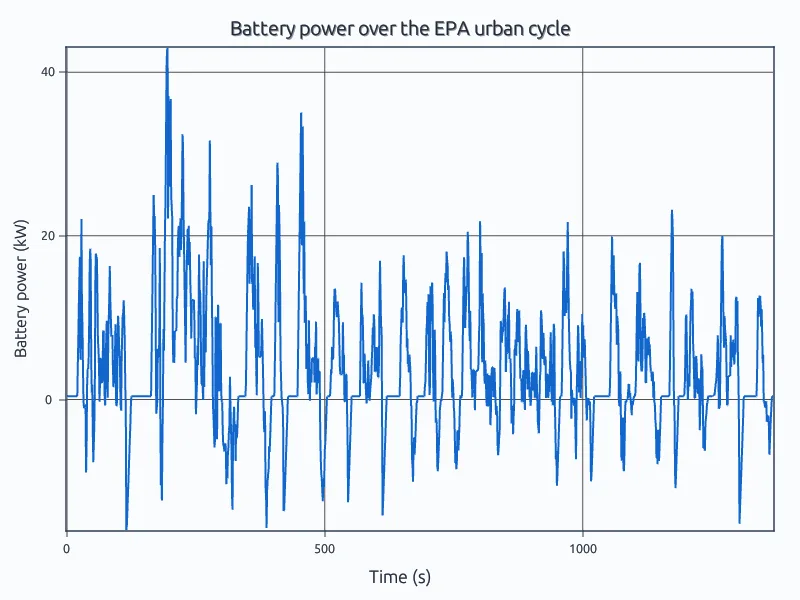
Battery power, Wh/km and range from the EPA's own trace.
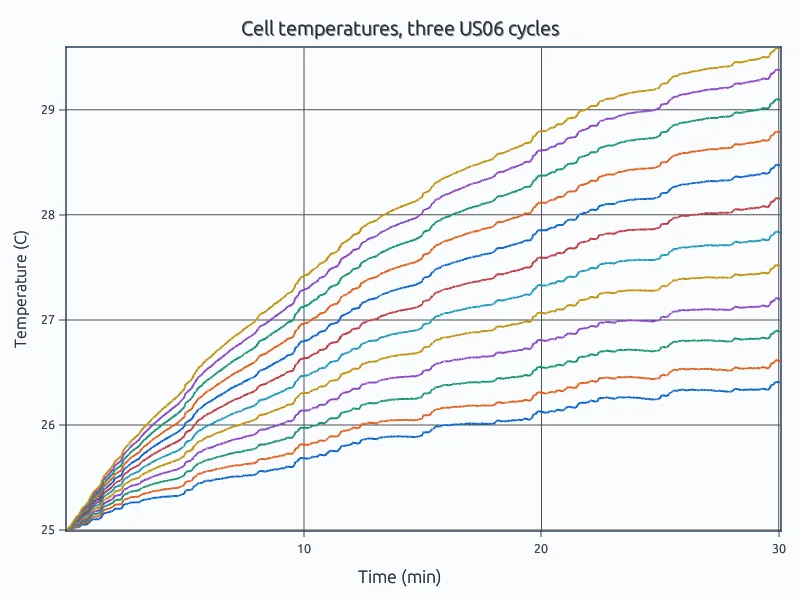
Twelve cells on a cold plate through three aggressive cycles.
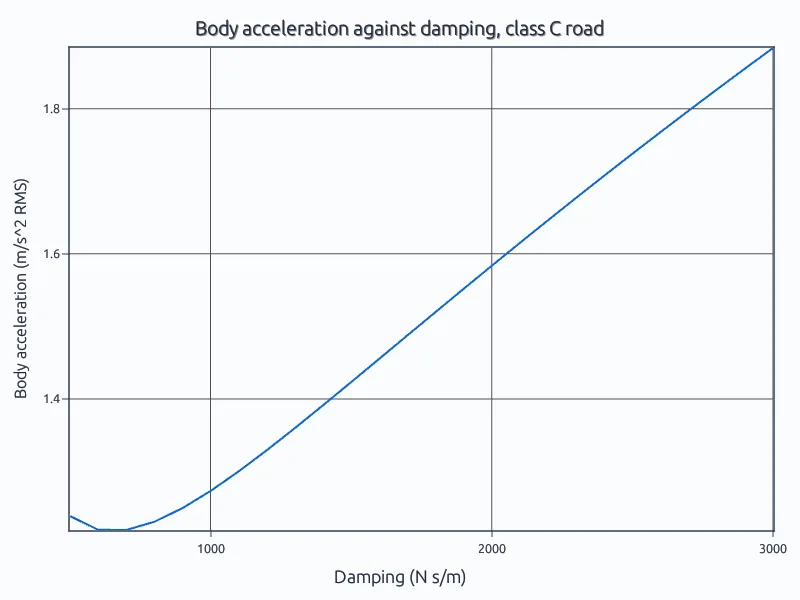
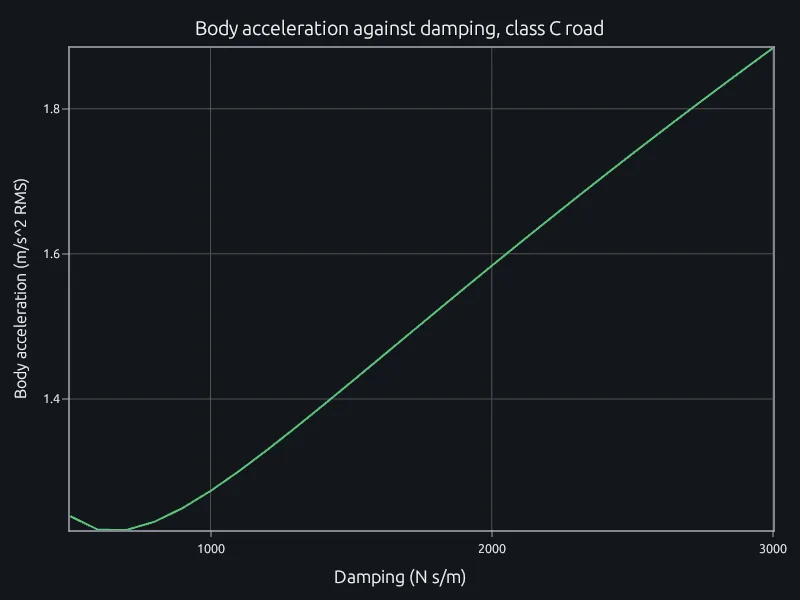
Body acceleration against damping on an ISO 8608 class C road.
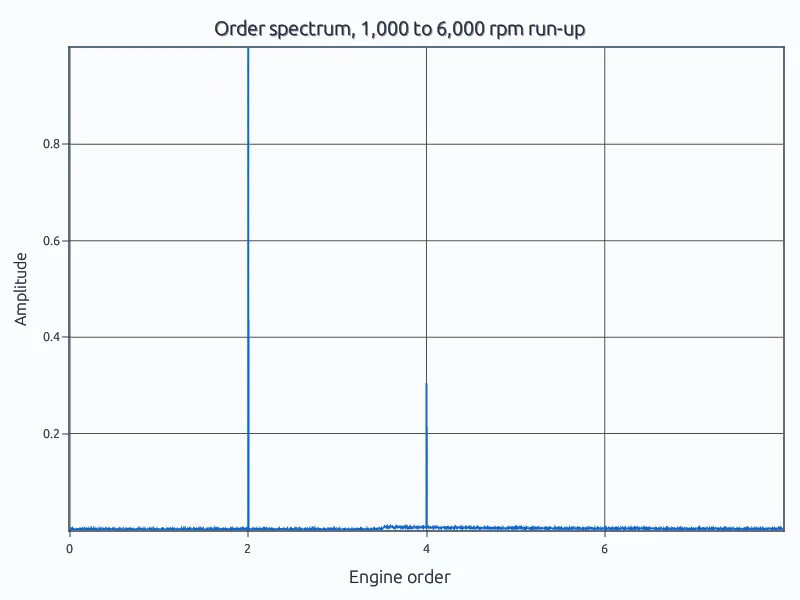
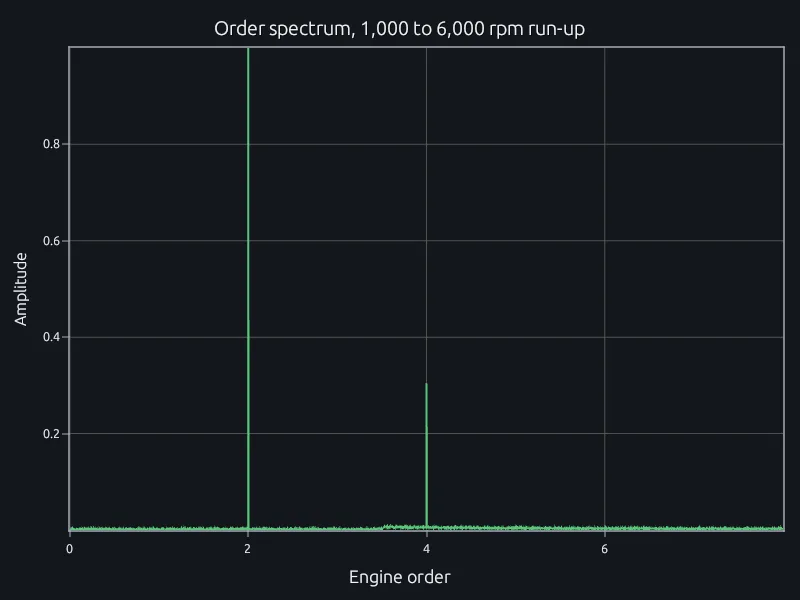
A 4-cylinder's orders, resampled to shaft angle.
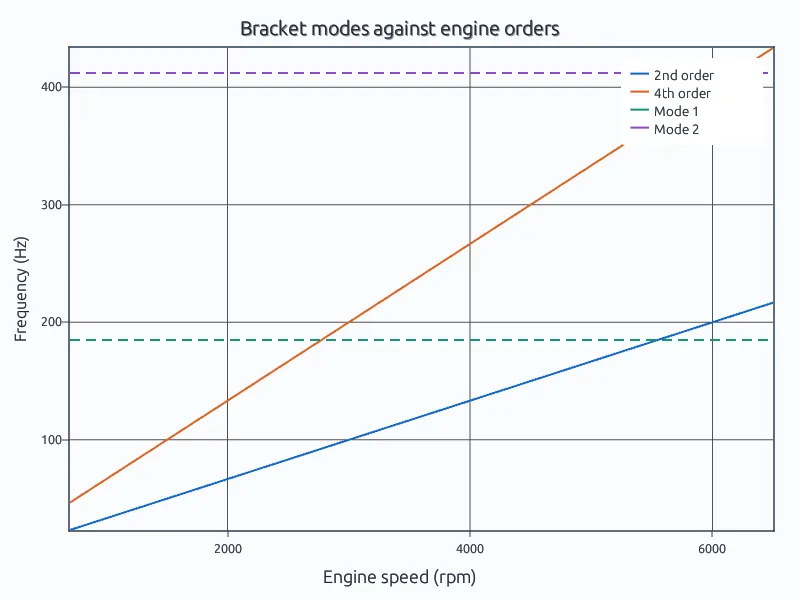
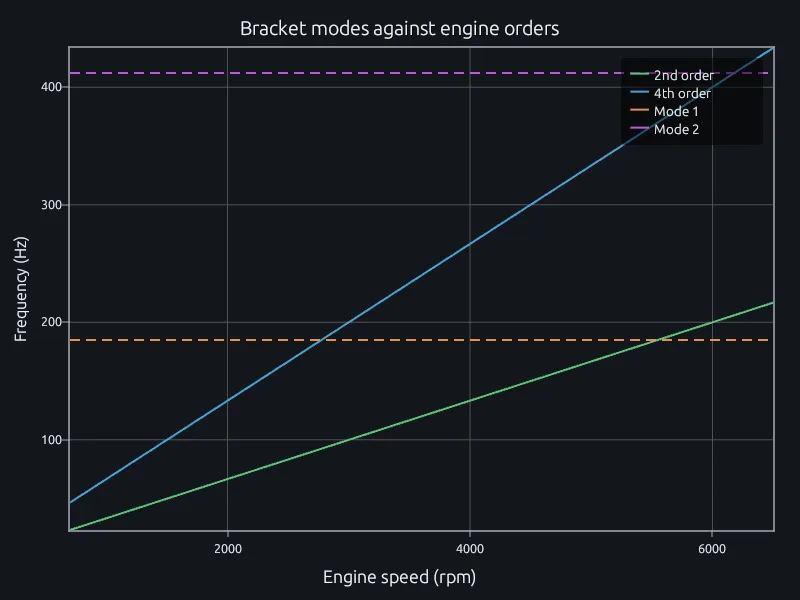
Where the second and fourth orders cross a bracket's modes.
Open the cell model example in a browser. No account needed.
Run three of your battery scripts and compare results and run times.
Talk to us about your test data and where the analysis needs to run.
Curve fittingDifferential equationsSignal processingSimulation in RunMat